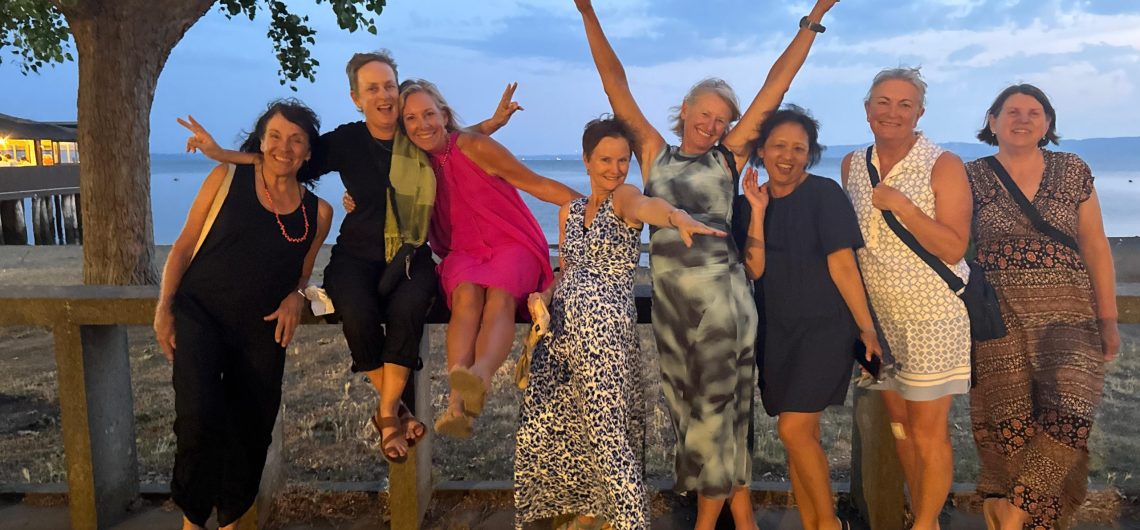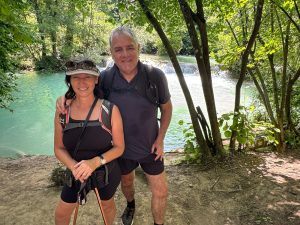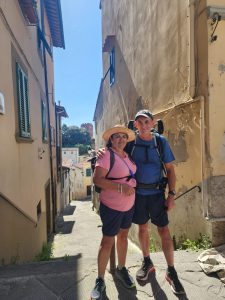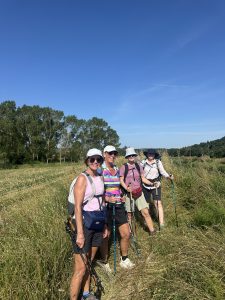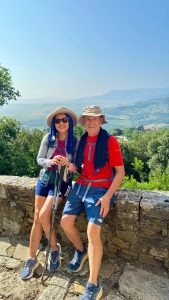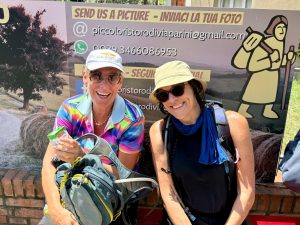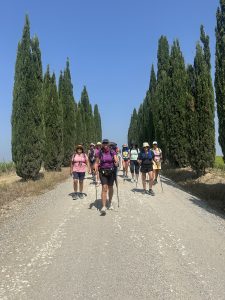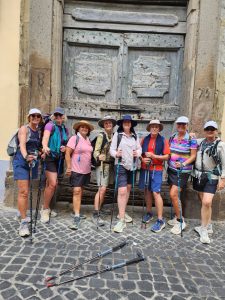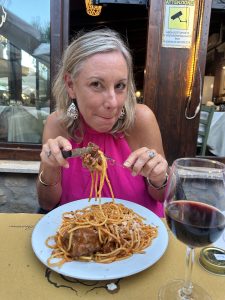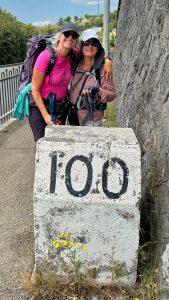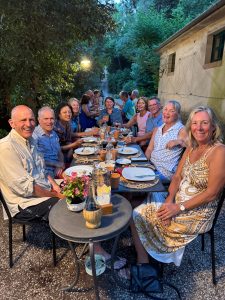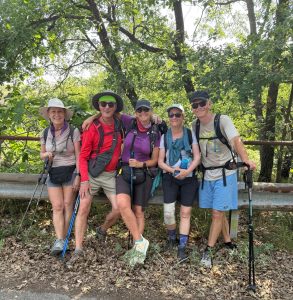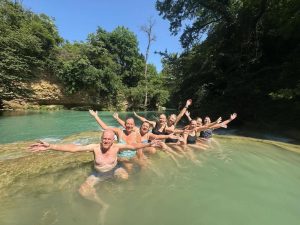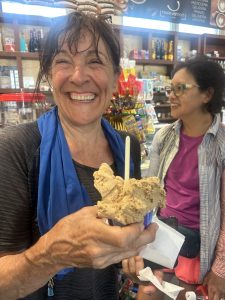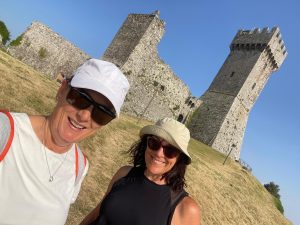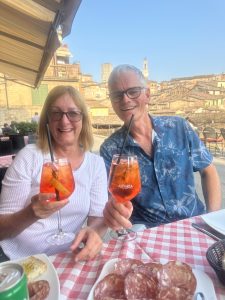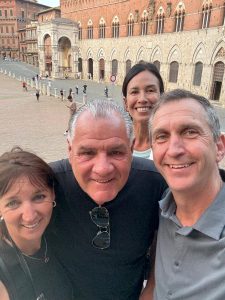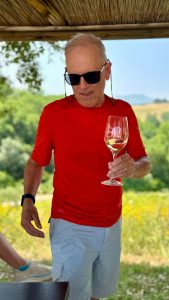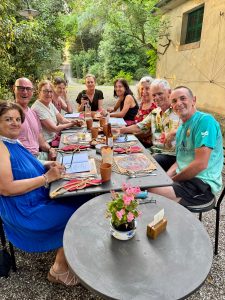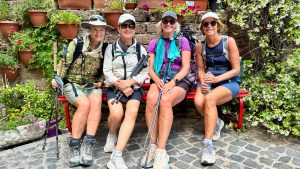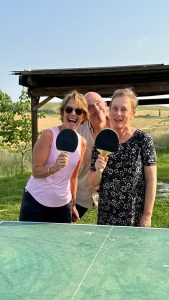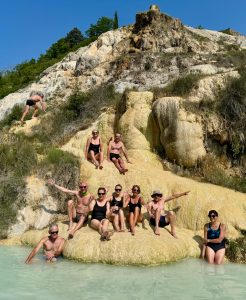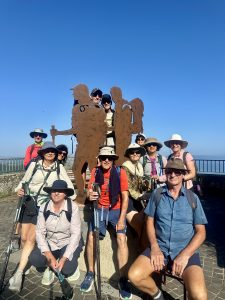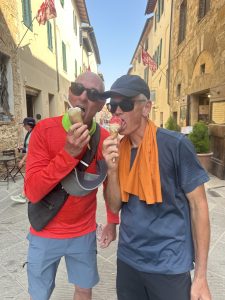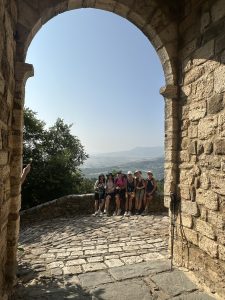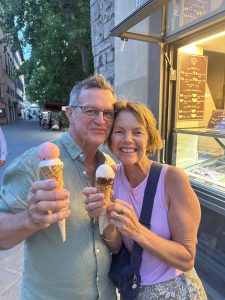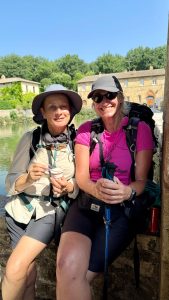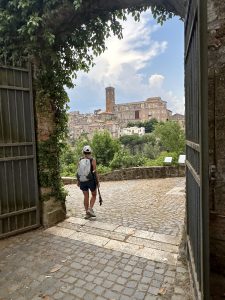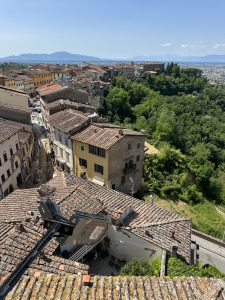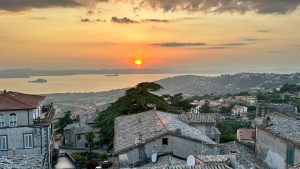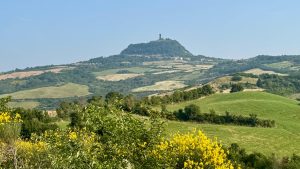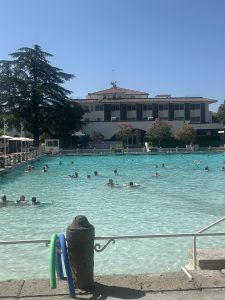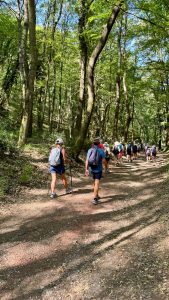
At the beginning of June, nineteen remarkable people placed their trust in me—and in Walk Local—to guide them on a journey of nearly 500 kilometres, from Lucca to Rome, on foot. Just me, one person, leading a group of people across central Italy, averaging 20km a day. And what a journey it has been.

These incredible walkers came with open hearts, curious minds, and a willingness to embrace every step, hill, view, village, sore muscle, blister and unexpected joy. Many weren’t seasoned walkers when they signed up. But with our training plan, they committed to preparing week by week—gaining not just physical strength, but confidence, resilience, and that quiet determination that only builds with effort and time.

In today’s world—where we’re often too busy, distracted, or pulled in too many directions—the decision to slow down and walk across a country is nothing short of extraordinary. When you consider the age range of our group, the life demands, the health challenges, the endless travel options available… choosing to walk Italy is bold. It takes courage. And a spark of inner adventure—something that often dims with age, but which each one of these walkers has shown burns brightly still.

The Heartbeat of the Group
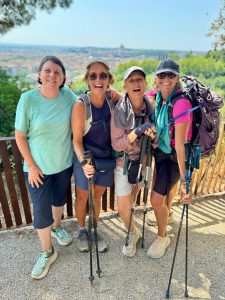
                 

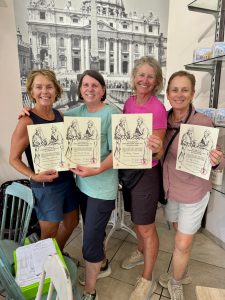
Eleven of our group share roots in our school days—most have been friends for over 50 years. Four are my closest friends from primary school—so many years of shared life, laughter, and memories. To walk alongside these lifelong friends on a journey like this was incredibly special and deeply meaningful.

We were also joined by two beautiful couples from Sydney, along with their friends from New Zealand, who brought humour, warmth, and such a joyful energy to our group. Their presence was a true gift. And rounding out the group were three solo walkers from Melbourne, Adelaide, and Sydney—each connected to Walk Local through word of mouth, and each bringing their own strength, spirit, and sparkle to the experience.  In Siena, we bid a heartfelt farewell to our wonderful friends and joyfully welcomed four new walkers from Canada into our group.

The Path We Walked

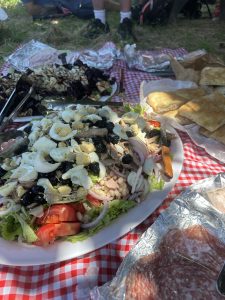
Our journey began in the walled city of Lucca, where we met as strangers and set our intention together with a pilgrims’ blessing. The early days took us along shaded aqueduct paths, through forested ridgelines and charming rural villages, leading to our first home at a peaceful agriturismo—with a pool, olive groves, and warm hospitality. We tackled the ups and downs of Tuscany’s landscape with grit, winding through chestnut groves, canals, and the Oasi Forestale, and shared our first of many long, relaxed lunches with local wine and laughter.
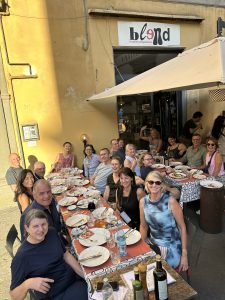
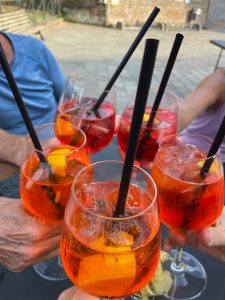
                 

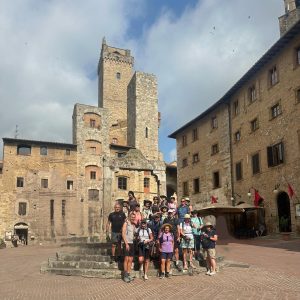
We climbed into the historic hill town of San Miniato, the first of many steep ascents that tested our legs and rewarded us with breathtaking views and lively piazzas and lots of truffles. As we walked deeper into Chianti country, the trail opened into vineyards and rolling hills, dotted with farmhouses and medieval towers. In San Gimignano, we had time to wander narrow lanes, sip Vernaccia, and savour the timeless beauty of a UNESCO World Heritage Site.

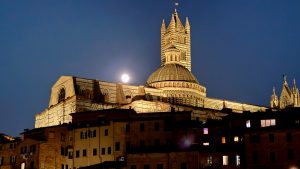
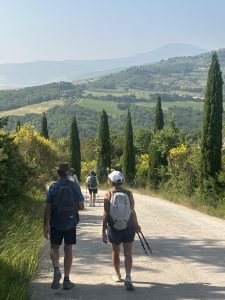
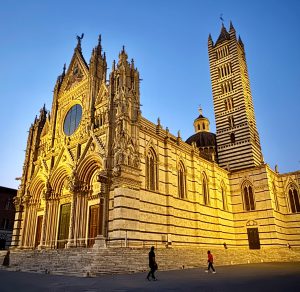
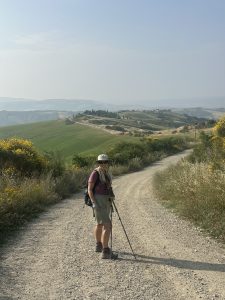
Each day brought new contrasts—dense oak forests, wide open wheat fields, riverside trails, and hidden hamlets. We swam in the Elsa River, climbed into the fortress town of Monteriggioni, and followed cypress-lined paths to Siena, where we stood in awe at the Duomo and celebrated a milestone: over 160km walked.

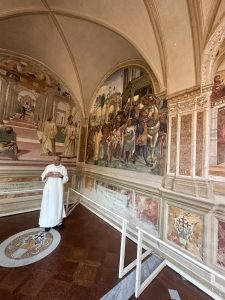
Leaving Siena, the terrain softened and opened up—golden fields, winding gravel roads, and the sun-soaked vineyards of the Val d’Orcia. We stayed at a monastery run by Benedictine monks, soaked our tired feet in the hot springs of Bagno Vignoni, and shared meals under the stars at rustic trattorias. Every stop, every bite, every view reminded us how walking brings us deeper into the soul of a place.

From San Quirico d’Orcia to Radicofani, the terrain turned more dramatic—long, hot climbs, fortresses perched on hills, and ancient pilgrim paths etched into the landscape. We crossed from Tuscany into Lazio, the scenery shifting to rocky outcrops, wild fields, and sparse, rugged farmland. In Proceno, we slept in a 17th-century castle, toasted the sunset in a quiet garden, and felt like characters from another time.

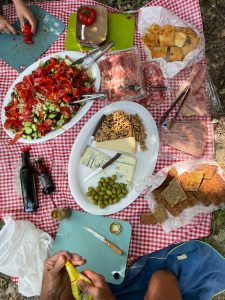
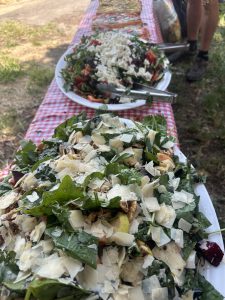
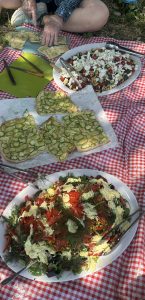
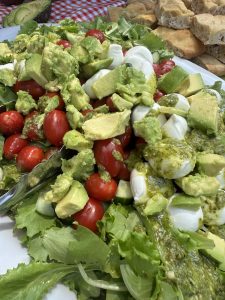
The lakeside town of Bolsena gave us a well-earned rest—an oasis of gelato, lake swims, and quiet reflection. We followed the shores of Lake Bolsena to Montefiascone, winding through olive groves and discovering the local wine legend of Est! Est!! Est!!!. Our days grew warmer, but so did our strength and camaraderie. We picnicked under hazelnut trees, cooled off in waterfalls, and floated lazily in the thermal pools of Viterbo.

As we drew closer to Rome, the trail led us through Etruscan cave roads, ancient villages like Sutri with its Roman amphitheatre carved into rock, and scenic rural paths flanked by hay bales, kiwifruit vines, cornfields, and towering oaks. One day brought us the steepest incline of the whole walk—and perhaps the most satisfying Spritz at the top.

Even as the kilometres accumulated, the group remained strong. We shared stories, pushed through heat and fatigue, and found joy in simple things: the perfect coffee stop, a shaded bench, a shared joke, a homemade feast from the nuns of La Storta.

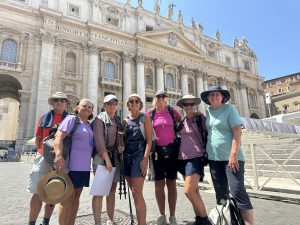
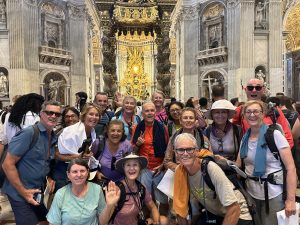
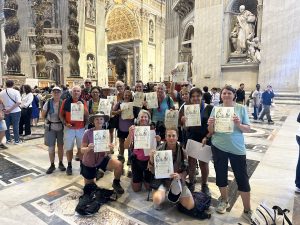
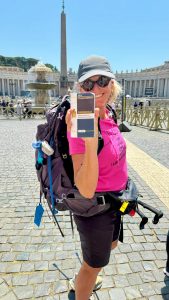
And finally—after nearly 500 kilometres, 24 days, and countless memories—we arrived on foot into St. Peter’s Square. Tired but triumphant, emotional but grounded, each of us stood there knowing we had done something extraordinary: not just walked across Italy, but walked into ourselves.
 

Gratitude Beyond Words

To each of you who walked with me—thank you. From the bottom of my heart.

Thank you for trusting me, for showing up each day with courage, humour, and grit. For lifting each other up. For sharing stories, steps, and spritzes. For choosing this path—both the literal one and the one within.

It has been one of the greatest honours of my life to lead you.

You proved that with preparation, community, and a positive mindset, so much more is possible than we often allow ourselves to believe.

This walk is not just about the kilometres. It’s about choosing presence over speed. Depth over convenience. And real connection over surface experience.

May This Journey Stay With You

I hope this pilgrimage stays in your hearts forever—as it will in mine. Whether you joined as a long-time friend, a new connection, or someone brave enough to say yes to an adventure, you are now part of something special: a community of walkers, dreamers, and doers who chose to walk local, eat local, sleep local, and see the real Italy.

Buon cammino, my friends.

With love and deep gratitude,

Carolyn
Reviews

‘This is a walk of a lifetime; challenging and satisfying. Carolyn will lead you through the Italian landscape to reach your destination in Rome. You see an Italy you would never see otherwise. Carolyn has the skills and knowledge to ensure you have a fantastic journey. Her passion and love for Italy and its people shines through. You are in safe hands with Walk Local. Highly recommend”.

“Incredible, unique and once in a lifetime experience. Preparation and training were required. The walk was life changing in my opinion and friends were made that I will keep in contact with. I can’t recommend Walk Local highly enough”.

“We recently did a walk from Lucca to Rome over 24 days with Walk Local. Carolyn was the perfect tour leader and guide and she puts everything into making our time on the walk memorable and enjoyable. The choice of accomodation and sights and activities are great and varied and you get to experience the small towns and meet the people and enjoy the local culture. The walk is sometimes challenging but at the end of each day it’s great to have a meal with your group and feel the sense of achievement from the walk. Highly recommended”.

ROLLING TUSCAN HILLS, STONE VILLAS, ITALIAN CYPRESS PINES, VINEYARDS, OLIVE GROVES, MEDIEVAL HILLTOWNS, TUSCAN LIGHT, PASTA, PIZZA AND ITALIAN WINE | ON FOOT.

Photo: Views to San Gimignano on the Via Francigena – Carolyn Travers

A trip to Italy is high on most traveller’s wish list. The history, art, churches, music, scenery and of course the food and wine. It is all so alluring. Italy is this and so much more. It is also the simple things that make Italy so special. The cobblestone streets leading to bustling piazzas; the Italian local food markets; standing at the village bar for morning coffee and pastry, family-run trattorias; Aperitivo (drink and snack); the evening passegiata (walk) with family and friends; the joy of gelato; the Italian language – in my opinion, the most beautiful in the world; sharing a plate of pasta; or just relaxing at the end of the day watching the sunset over the countryside enjoying a glass of Chianti and antipasto. Most of all though, Italy is about the Italians and their love of life and passion for food, wine and family that makes it so special. To capture the essence of Italy you need to take it slow. What better way than a long slow walk through the heart of Tuscany from Lucca to Siena to experience the real Italy.

Our walk is 140kms on an ancient pilgrim’s trail, the Italian Camino, “the Via Francigena”. Dating back to the 990AD, the Archbishop of Canterbury, Sergeric the Serious, mapped his journey which became famous amongst pilgrims, traders and armies heading to Rome throughout the centuries. The walk is for religious and non-religious pilgrims, accommodation is in Monasteries, working farms, villas and B & Bs; meals are in local trattorias with Tuscan specialities and local wine from the region. Walking is on country lanes, woodland tracks, ancient stone paths and gravel roads. Fresh air, fabulous scenery, a comfy bed and a hot shower at night and delicious local Italian food and wine to enjoy with a small group of like-minded travellers at night. Say no more. Let’s walk.

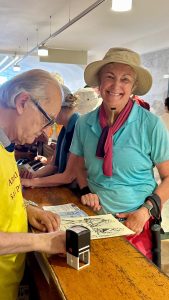
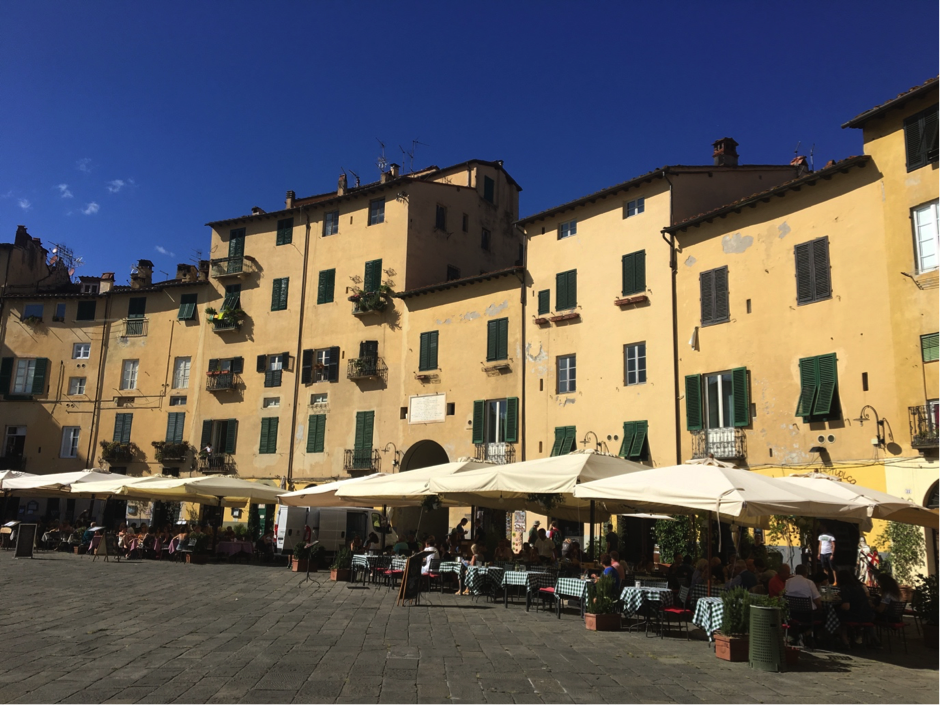
Our walk starts in Lucca, with its sixteenth-century, tree-lined Renaissance walls, pretty piazzas, 23 churches, narrow cobblestone alleyways, designer shops, trattorias and cafes. It is almost a car-free zone so watch out for the locals weaving past on their bicycles stopping to have a chat with friends or to eat gelato in the late afternoon. It is the perfect start to a pilgrim’s journey, one Segeric enjoyed himself along with tens of thousands of other pilgrims throughout history. Our first stop is the Cattedrale di San Martino, with its beautiful green and white marble exterior for our first stamp. On the Camino, we have a Pilgrims Passport and each day we receive a stamp to commemorate our journey. Walk to Rome and you will receive a Certificate from the Vatican.

Photo:  Piazza dell’Anfiteatro, Lucca – Carolyn Travers

Lucca has so much to offer, I always recommend walkers to arrive a couple of days early so they can hire a bike and ride the wall, visit the beautiful Villas of Lucca, climb the Guinigi Tower with its Holm trees and spectacular views or just sample the local Lucchese fare such as Tortelli Lucchese, accompanied with wines from the surrounding hills such as my favourite Tenuta di Valigiano or Vermentino from Buonamico, Montecarlo (Italy that is).

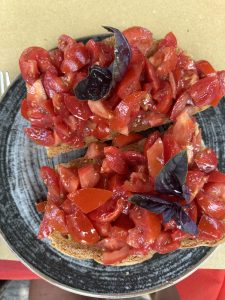
Leaving Lucca our first day is a flat walk passing the towns of Cappanori and Porcari with the villas, churches, market gardens and local village shops as we make our way to San Miniato, via Altopascio. Altopascio is known for its tradition of bread making that has survived for centuries and the sharing of bread was, and still is, the simplest expression of friendship – a bit of a mecca for bakers and has a bread festival once a year to commemorate. The bread is made with Tuscan flour, there is no salt, normal yeast is not used but with a special leavened dough that is produced daily and finally – Tuscan water. The crust is crisp and the centre is soft. Staying in the old Borgo we break bread at a local favourite ‘La Dogana’ with platters of locally cured prosciutto, pecorino cheese, wild boar salami, bruschetta with the tastiest tomatoes, and local wines from Montecarlo.

Photo:  Bruschetta al pomodoro – Carolyn Travers

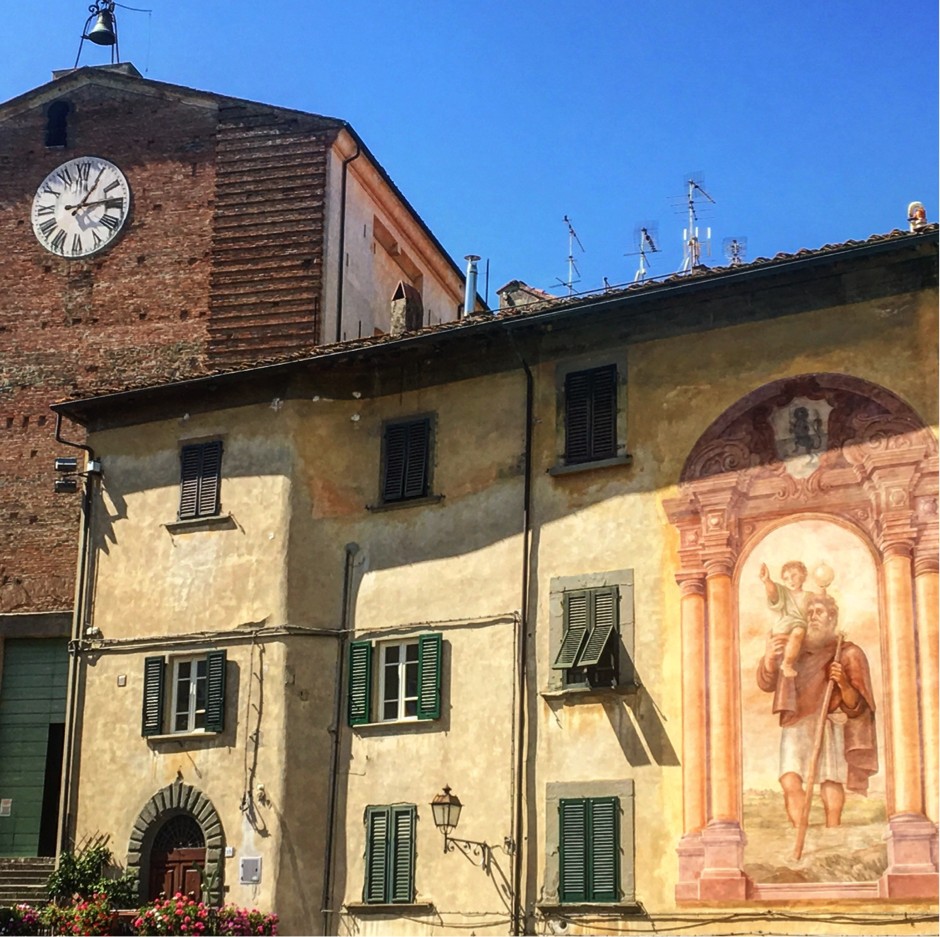
Up early we follow ancient tracks, cross the historic Ponte Cappiano fortified by the grand Medici family, along original paved roads, canals lined each side with canola and sunflowers and up into the old town of Fucecchio with its 10th Century Abbey of San Salvatore and the Church of San Giovanni. The views from the parklands down towards Lucca and beyond are a worthy stopping point. After a well-earned rest, we head for San Miniato Alto which is a beautiful hill town with a rich history with castles, towers and churches built throughout the centuries in commemoration of past Popes and rulers. A visit to Piazza Republica, brightly decorated with frescoes and the Torre Federico II, originally built in 1220 for the Holy Roman Emperor, are a must. Due to its strategic positioning the tower has magnificent views of the town and the surrounding countryside. Our accommodation for the night is with the wonderful Friars at Convento San Francesco. Every evening at 6.30 the Friars conduct mass for the pilgrims and give them blessings for their onward journey.

Photo:  Fucecchio, Italy – Carolyn Travers

San Miniato’s other claim to fame is the ‘white truffle’, which is now a rival to the Piemonte region in its rich truffle production. La Taverna dell’ Orzio is a little local favourite of mine, wonderful antipasto with cured meats and truffle cream, followed by freshly made Tagliatelle with Truffles or Thistle and Ricotta filled Ravioli with butter and shaved truffle sauce. The aroma, the silky texture of the handmade pasta, mixed with the delicious taste of the white truffles just fills your mouth with joy. Simone Fiaschi, Owner/Chef who looks a bit like Pavarotti, comes from a family of norcini (butchers who roamed the country) carries out the tradition curing all his own meats and they are delicious.

Photo:  San Miniato Alto – Carolyn Travers

Leaving San Miniato we start our 24km walk to Gambassi Terme. We now enjoy our first taste of the Tuscan countryside. The rolling hills, views as far as the eye can see, white gravel roads, hills lined with Italian Cypress pines, ploughed fields, rows and rows of vines filled with lush red grapes ready for harvesting, old Tuscan farmhouses left empty and ripe for the purchasing and finally reaching our own little oasis for the night at Borgo della Meliana. Lush green lawns, pools and our own villa. Time for a swim and relax in the deck chairs enjoying the Tuscan sunshine and the surrounding vineyard and olive groves. Pizza at the local trattoria is on the menu tonight along with a welcome catch up with Italian pilgrims we have met on the way and an early night.

Photo:  Pilgrims on the trail, San Miniato to Gambassi Terme

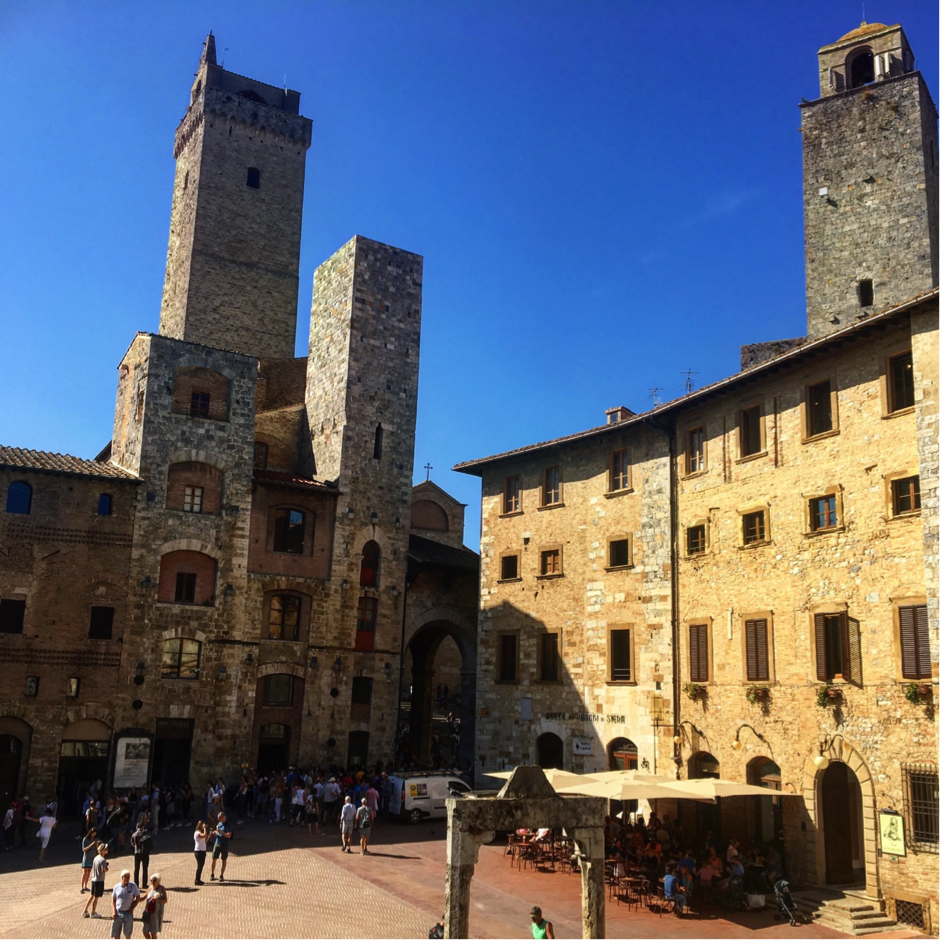
Heading up past the vineyards to Gambassi Terme this morning we stop at a local bakery for cappuccino and fresh pastries and collected our freshly made prosciutto filled focaccia – lunch on the road. We have a lovely walk through the old town of Gambassi Terme, known for its hot springs, botanic gardens and pretty cobblestone alleyways filled with potted plants leading to little piazzas. We stroll out of town and make a few stops on our way to one of the most visited hill towns in Tuscany, San Gimignano. Passing vineyard after vineyard, with the Sangiovese grapes ready for harvesting according to the winemaker at Azienda Agricola Casanuova, a perfect place to stop and enjoy a tasting of last year’s Chianti. Views of San Gimignano are on our horizon for the next two hours and as we wind our way up through the Porto into this medieval hill town with its 13 towers standing tall. We are greeted with shops selling pottery, linen, pecorino cheese, salami, and gelato. The world-famous gelato maker at Sergio Dondoli has his gelateria in Piazza Della Cisterna. You can’t leave without trying unique flavours such as Saffron and Pinenuts, delicious. Our Albergo is situated right in the heart of San Gimignano with fabulous views over the piazza or overlooking the countryside below. With plenty of time to explore or just sit and relax with an Aperol Spritz, a local favourite, taking in the beauty of the town of towers watching the passing parade. For the adventurous, and if your legs will let you, I recommend a climb of the Torre Grosso for spectacular views – you will see where you have walked from and where you are going too – it puts it all into perspective. Another highlight and a must- are the Fresco cycles in the Duomo which are original from the 13th century. One side of the cycle is dedicated to the Old Testament and the other the New Testament. To finish off a wonderful day we enjoy the local Tuscan fare at Sosta Sulla Francigena, sitting outside with views down the valley as the sun goes down sipping our Vernaccia San Gimignano, the local white wine of the town.

Photo:  Piazza Della Cisterna, San Gimignano

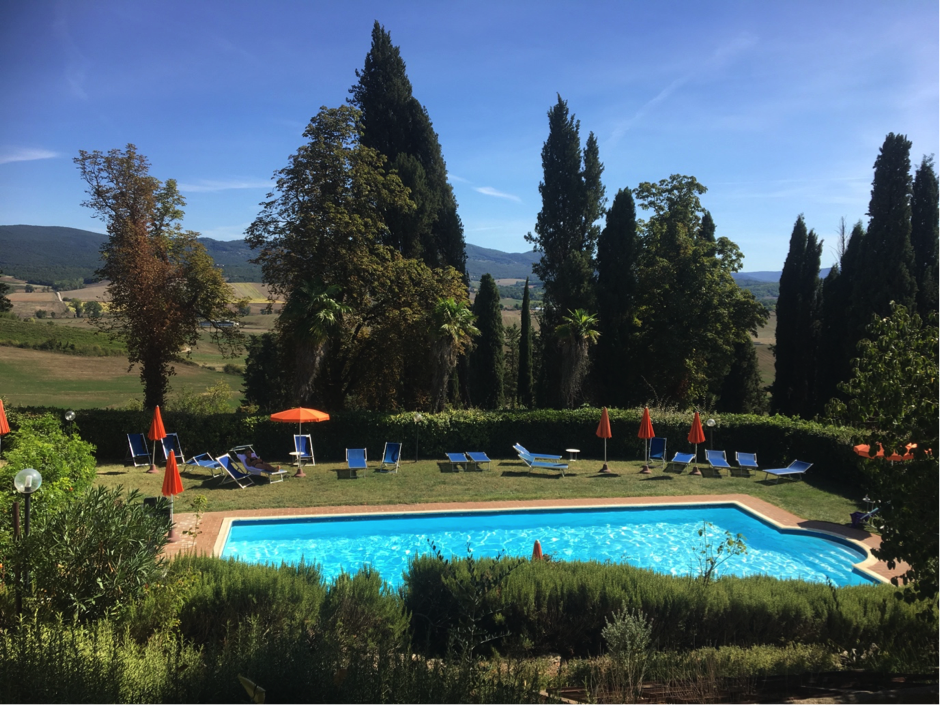
After being treated to a delicious breakfast with 180 degree views down the valley, we walk out the gates of San Gimignano, towards Colle Di Val D’Elsa. The views looking back to San Gimignano are breathtaking with its medieval towers dominating the skyline. We pass monasteries where the priests enter a code of silence, avenues of cypress pines leading to stone villas, their pools hanging off the edge of patios, big terracotta urns filled with red geraniums and lush green lawns with deck chairs. We leave the valley and enter the quiet woods of oaks, hazelnuts, and chestnuts, pass over creeks and rocky beds, crystal-clear bathing spots on old paths, abandoned villages and farms, winding our way past fields of sunflowers ready for harvesting and finally up to our accommodation for the night – Tenuta di Mensanello. A real working farm. With a pool and terrace surrounded by fields of wheat, barley sunflowers, legumes and fodder crops along with their own grapevines and olive groves, we relax and enjoy the afternoon with a specially booked wine tasting and evening meal of locally grown and made produce accompanied by more of their own DOG wines.

Photo:  Poolside at Tenuta di Mensanello – Carolyn Travers

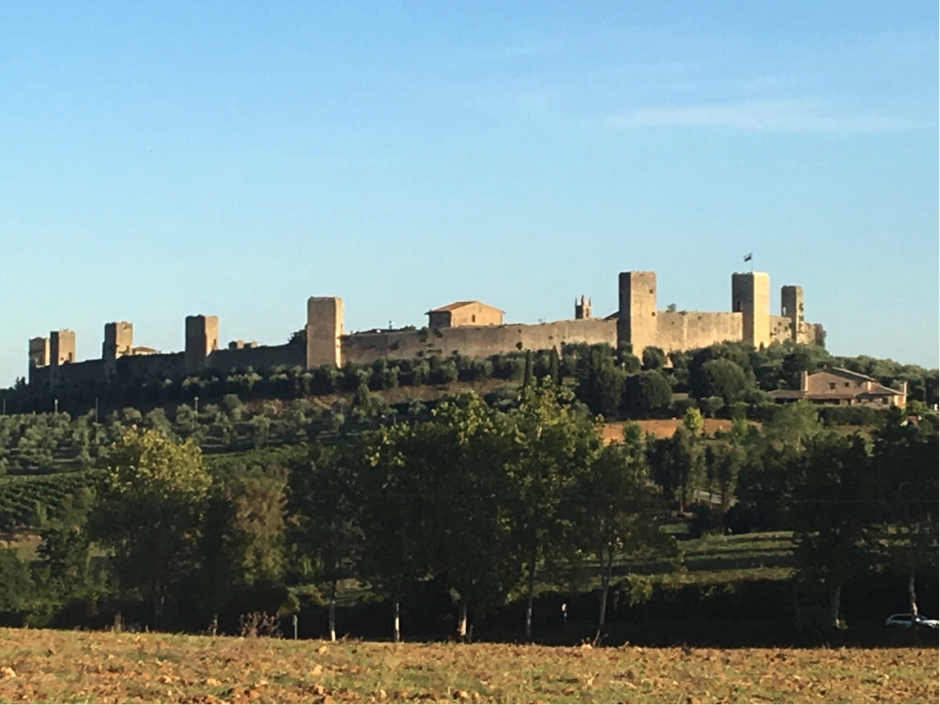
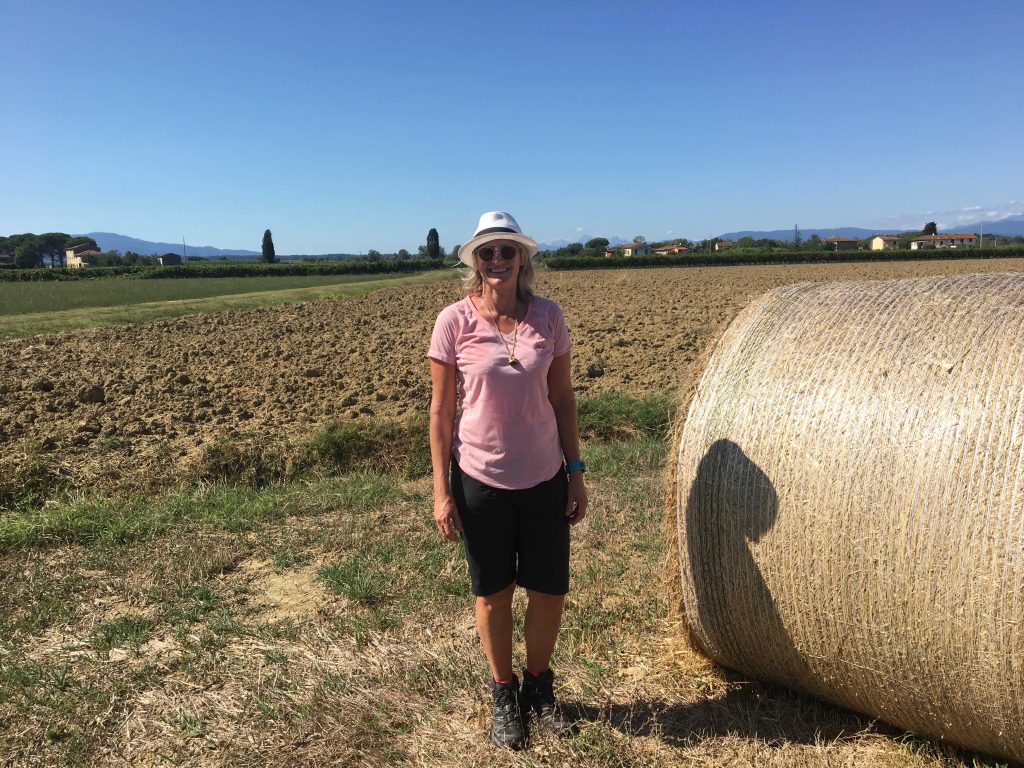
The Tenuta treats us to a breakfast of freshly baked treats and freshly brewed coffee to start our day. Our walk this morning is through woodlands then the land opens up to reveal freshly ploughed fields with the Medieval hill town of Monteriggioni in the distance. We walk to, and away from it, for a couple of hours, past fields with rolled hay, constantly impressed by its medieval battlements. It is a picture-postcard moment.

Photo:  Monteriggioni – Carolyn Travers

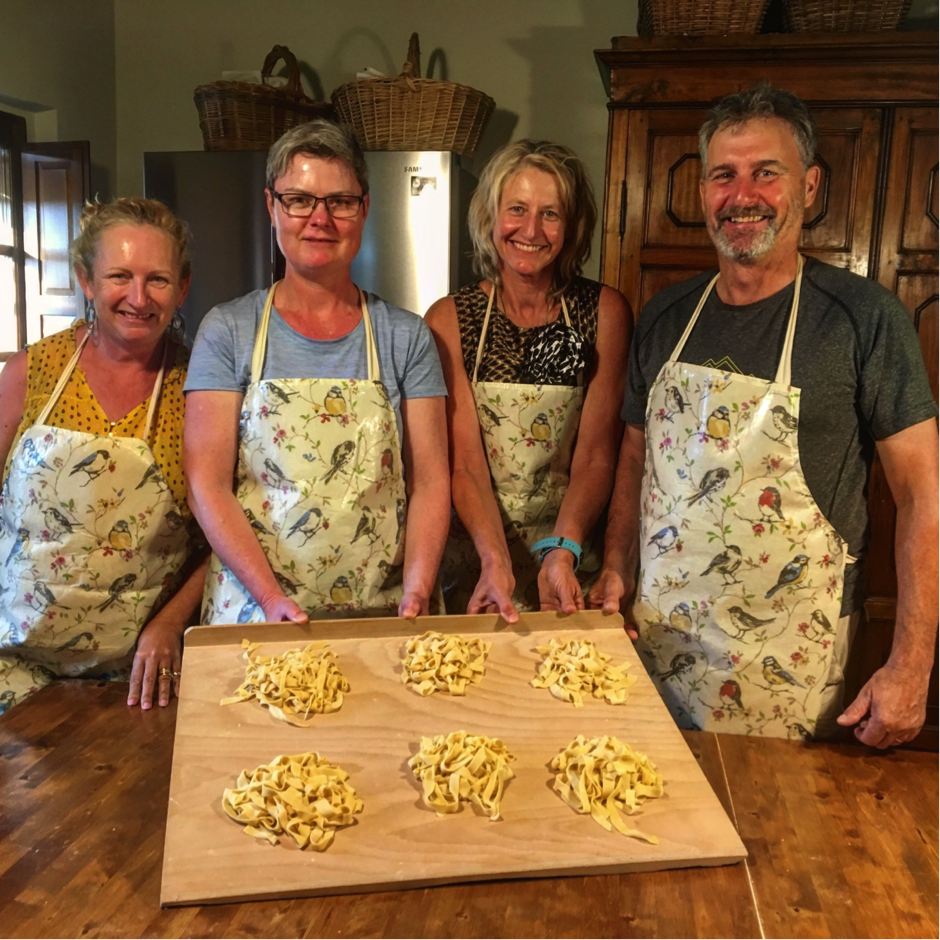
A swim to cool off at our hotel before our cooking class at the wonderful Le Pietre Vive who specialise in traditional Tuscan cuisine, prepared from locally sourced, farm-to-table ingredients. This is my first time at making fresh pasta without a machine. Our class included a selection of bruschetta – fresh garlic and thyme, fresh pecorino and local honey and of course bruschetta Pomodoro with lots of Italian secrets in the preparation. I, for one, did not know you take the centre out of the garlic clove to remove the bitterness. We prepared homemade tagliatelle with saffron, mint and zucchini for primi and a secondi of Chicken with Vin Santo (the sweet wine) and finally the dolce of tiramisu with crushed amaretto biscotti. All served with their own locally grown and produced wine. As we departed, the Restaurant on-site was filled with diners sitting out on the lawn enjoying the last of the Summer heat, overlooking the glorious views, as the sunset.

Photo:  Cooking Class at Le Pietre Vive, Siena – Carolyn Travers

Aftera delicious cooked breakfast, we leave Monteriggioni, the old defence post of Siena, with 20km to walk. We walk on gravel paths through the countryside of olive groves and ploughed fields, passing the rural Castello della Chiocciola, now a hotel with its 12th Century tower and imposing buildings, onto footpaths, crossing roads to finally reach our first and then second gateway into Siena. We join tourists and locals alike and wander down the narrow cobblestone streets, past the medieval brick buildings, churches, piazzas, designer shops, trattorias to the Duomo, where pilgrims receive free entry and a final stamp for this journey. To celebrate we walk through the archway to Piazza del Campo and take in the full majestic feel of the grand piazza – its clock tower looming above the circular sloping piazza. It is now time to sit and take in the grandeur of Siena. Time to reflect on where we have been and what we have just achieved and to finally rest our feet – all with the help of a well-earned Margherita pizza and Birra Moretti.

Photo: Piazza del Campo, Siena – Carolyn Travers

It is not an easy walk, it is not flat, the hills are rolling, and what goes up must come down. Sore feet can be a problem but with good preparation, this is easily avoided. The weather can be unpredictable – but no pilgrimage is meant to be easy, thousands of people throughout history could vouch for that. I can guarantee when you finish you have achieved something special. You have walked through the heart of Tuscany. You haven’t hopped on and off a bus, taken a photo, bought a souvenir and moved on. You have experienced the local Tuscan hospitality at its best, conversed in all different versions of the Italian language, met other pilgrims from all over the world, eaten at local trattorias, tasted Nonna’s local specialities, enjoyed wine famous from the region, and experienced first-hand the magic of the Tuscan landscape. Most importantly though, you have had time to enjoy the peace and quiet, had time for reflection, time to engage in the art of good conversation and you are fitter and healthier than when you started. I think you have experienced the true essence of a pilgrimage.

If you would like to come walking, click on the links below.

http://www.walklocal.com.au/product/walk-to-rome/

http://www.walklocal.com.au/product/the-via-francigena-guided-walk-lucca-to-siena/

Buon Camino

Carolyn

http://www.walklocal.com.au