From the Great Saint Bernard Pass to Lucca: 700 Kilometres of Grit, Gratitude, and Italian Magic
- Carolyn
- adventure travel, Great Saint Bernard Pass, Italy walking tours, Lucca walking adventure, Via Francigena Italy, Via Francigena pilgrimage, Via Francigena walk from Great Saint Bernard Pass to Lucca, Walking from Switzerland to Italy, Walking holidays in Italy
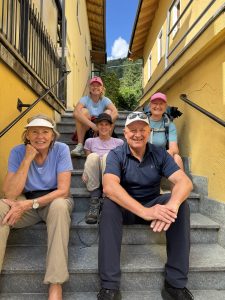
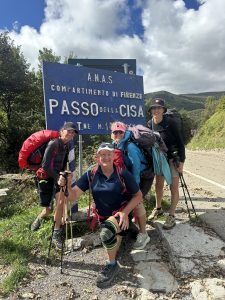
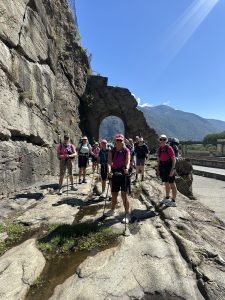
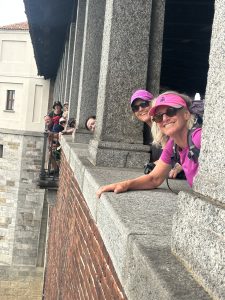
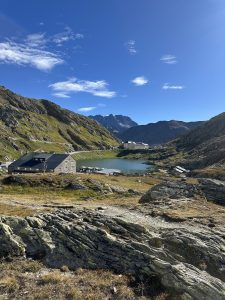
It began high in the Swiss Alps — the wind biting, the air thin, and our hearts full of anticipation. Standing at the Great Saint Bernard Pass, 2,469 metres above sea level, the path to Lucca stretched ahead for nearly 700 kilometres — crossing six Italian regions, countless valleys, medieval villages, vineyards, and cities that have welcomed pilgrims for more than a thousand years.
This was not just a walk. It was a journey of spirit, stamina, and shared adventure — a pilgrimage along the ancient Via Francigena, one of Europe’s oldest walking routes linking Canterbury to Rome. For thirty extraordinary days, we followed its path south, all on foot, carrying everything we needed on our backs, and collecting stories, blisters, and friendships along the way.
A Journey of Challenge and Discovery
The Via Francigena is not for the faint-hearted. It’s a trail that demands resilience — and rewards it tenfold. From steep alpine climbs in the Aosta Valley to the never-ending rice fields of Lombardy, from the forests of Emilia-Romagna to the golden hills of Tuscany, it tested every muscle and every mindset.
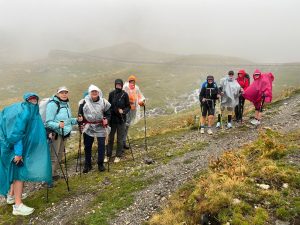
There were moments when the sun was relentless, the rain turned trails into muddy slides, the pack felt impossibly heavy, or the road seemed to stretch endlessly ahead. But those moments — the hard, silent ones — became the foundation of something much greater: a deep sense of accomplishment and connection, both to the land and to each other.
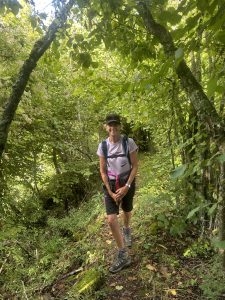
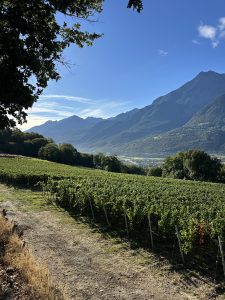
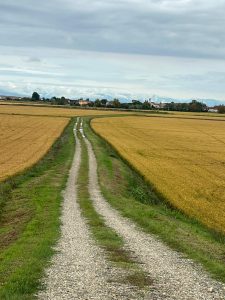
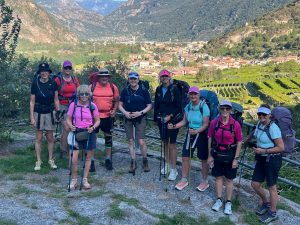
Each morning, shoes laced and backpacks on (after our great breakfast, of course!), we stepped out onto the trail — through valleys watched over by the Matterhorn, past rivers, vineyards heavy with grapes, chestnut and oak forests, and hilltop towns ringing with church bells. Through rice fields, tomatoes, corn, and beans, then up again through tough forests and shale trails to conquer the Passo del Cisa — and back down again, which was just as challenging. When the olive groves and market gardens appeared, and vineyards once again lined the hills, we knew we were in Tuscany — with beautiful glimpses of the Ligurian Sea. Every day reminded us that true beauty often comes after the hardest climb.
The People Who Made It Possible
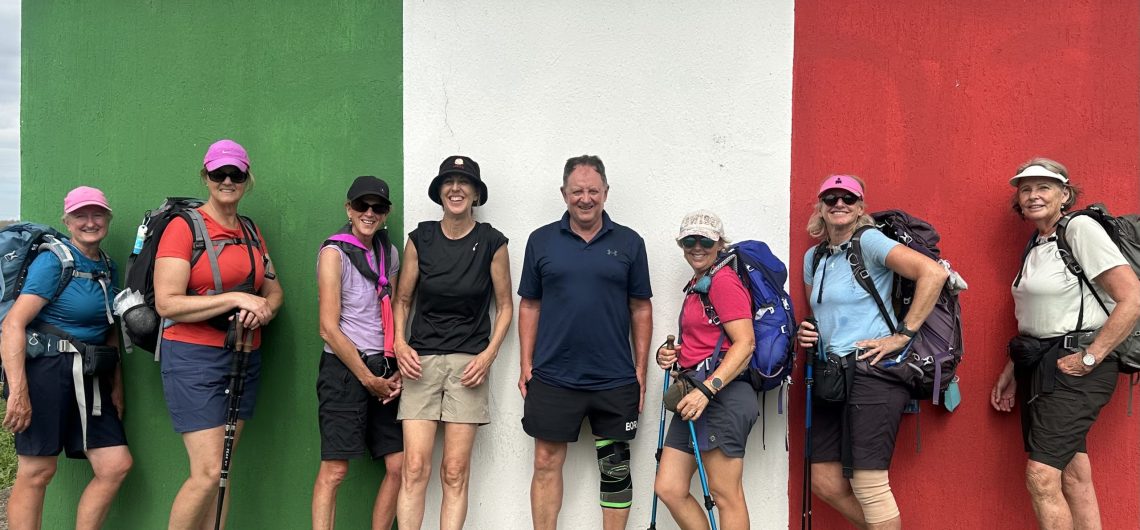
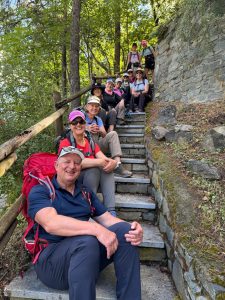
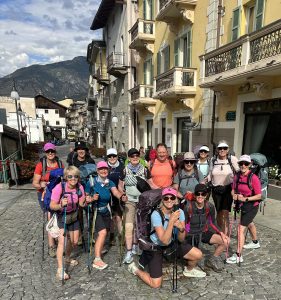
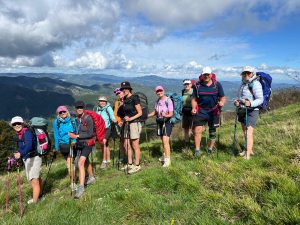
This journey would not have been what it was without the thirteen incredible walkers who shared it.
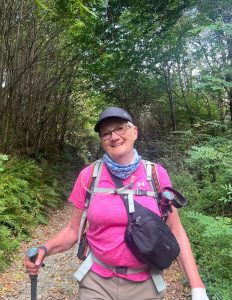
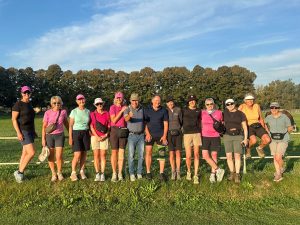
Jacky, Jenni, Jane, Colleen, Jennifer, Marie, Julia, Robyn, Peter, Carmel, Sharon, and Anne — what a team. Each of you brought your own strength, humour, and heart to this adventure. Together, we carried not just our backpacks but each other — through fatigue, laughter, sore feet, and triumphs.
The journey was deeply personal — whether your goal was to finish, to walk every step, or to take time to explore the towns along the way, it was an extraordinary achievement of endurance and willpower. You are living proof of what’s possible when determination meets adventure.
This is what I love most about leading these walks: seeing people push beyond what they thought possible, watching resilience blossom into joy, and sharing moments that remind us how alive we really are.
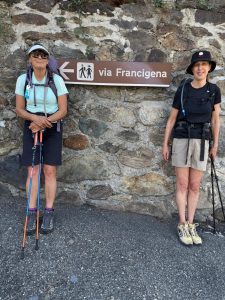
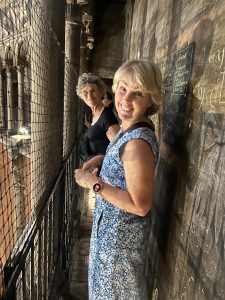
Six Regions, Six Flavours of Italy
The beauty of this journey was not just in the distance — it was in the diversity. Each region of Italy unfolded like a new chapter, with its own rhythm, flavour, and charm. From the snow-dusted peaks of the Alps to the sunlit vineyards of Tuscany, the Via Francigena offered not only a trail through geography, but through history itself — a thread connecting medieval pilgrims, Roman engineers, monks, farmers, and armies across a thousand years.
Aosta Valley – Where It All Began
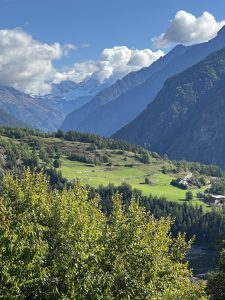
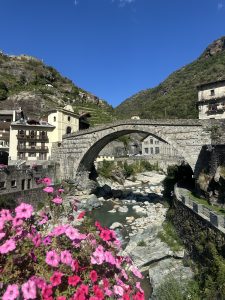
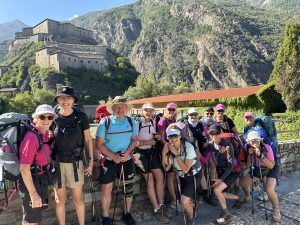
Our descent from the Great Saint Bernard Pass into the Aosta Valley was dramatic and unforgettable — misty mountains, Roman bridges, medieval castles, and vineyards clinging to impossibly steep slopes. This is a land shaped by both nature and empires. The Romans carved their roads through these passes two millennia ago, leaving behind triumphal arches and aqueducts that still stand sentinel over the valley.
We walked through villages like Étroubles and Aosta itself, where cobbled lanes echoed with history and the scent of alpine herbs. Locals spoke in a melody of Italian and French, reflecting centuries of borderland identity. Each evening brought rustic mountain feasts — creamy fontina cheese melted into polenta, paper-thin slices of cured meats, and hearty stews made for those who live close to the clouds. The wine, deep and earthy, told stories of vines that somehow thrive where stone and snow reign.
Piedmont – The Heart of the North
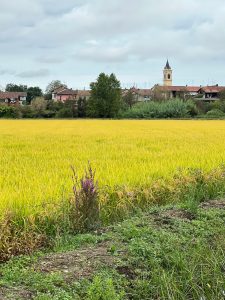
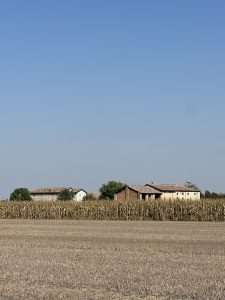
Crossing into Piedmont, the landscape softened. The high peaks gave way to wide plains and long horizons. Here, the rhythm of life slowed, and the path wound through farmlands and rice fields ripening under the sun. This was the Po Plain — Italy’s agricultural heart — where generations have cultivated rice for the creamy risotto that define northern cuisine.
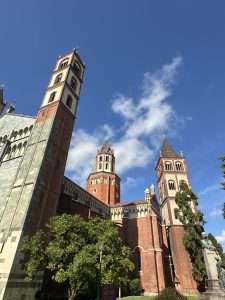
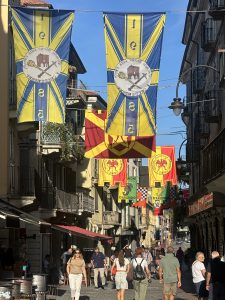
The towns felt timeless: Vercelli, with its centuries-old abbey; small piazzas where café owners greeted every local by name; churches where pilgrims’ scallop shells were carved into the walls. Rain or shine, the people’s warmth wrapped around us like a familiar embrace. Piedmont is often called the region of quiet beauty — and as we walked through misty mornings and endless fields, we understood why. Hospitality here wasn’t just offered — it was lived.
Lombardy – The Land of Abundance
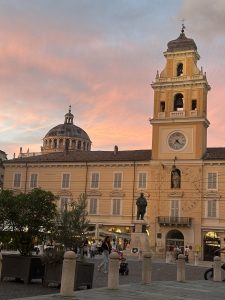
Flat fields soon gave way to the bustling energy of Lombardy — a place where commerce, culture, and cuisine meet. The Via Francigena here wound past riverside villages and market towns where medieval towers stood beside Renaissance façades. In Piacenza and Pavia, history felt alive in every stone. Pilgrims have crossed these same bridges since the 10th century, seeking shelter in the same hospices that once welcomed crusaders and monks.
Evenings brought laughter, prosecco, and plates that reflected the richness of the land: tortelli filled with herbs and ricotta, fried gnocchi served with salumi, risotto infused with sweet beans and Nebbiolo wine. Each region had its own twist on familiar flavours, and every stop seemed to tempt us with a new dessert — perhaps a slice of torta di mandorle or creamy zabaglione. Lombardy was abundance in every sense — of food, friendship, and joy.
Emilia-Romagna – The Food Lover’s Dream
If Italy is the heart of good food, Emilia-Romagna is the heartbeat. This region is a feast for the senses and the soul. We walked through lands that gave the world Parmigiano Reggiano, balsamic vinegar, and prosciutto di Parma — ingredients that have defined Italian cuisine for centuries. The scent of bread baking drifted from village ovens; the sound of church bells mingled with the chatter from trattorias spilling onto cobbled streets.
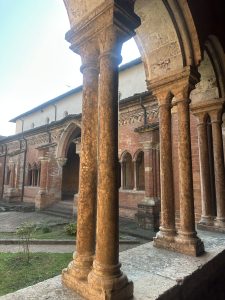
The terrain here began to change — the plains gave way to the foothills of the Apennines. Trails wound through forests of oak and chestnut, over stone bridges and past ancient monasteries perched above valleys. Every climb brought a reward: sweeping views over patchwork fields, or a rustic meal served with regional Lambrusco. Emilia-Romagna is generous, both in food and in spirit, and we left each table with full hearts as well as full plates.
Tuscany – The Grand Finale
And then came Tuscany — the golden heart of the journey. This was Italy at its most poetic: olive groves shimmering in the afternoon light, cypress trees standing like sentinels along winding roads, and hilltop towns glowing under terracotta rooftops. We passed through Sarzana and Pietrasanta, where art seems to live in the air, and then into the marble country of Carrara — the same mountains that Michelangelo once quarried for his masterpieces.
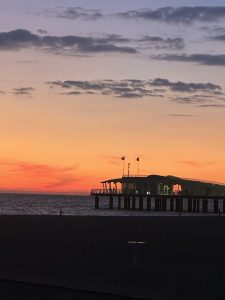
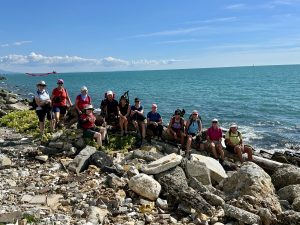
The scent of rosemary and wild thyme followed us through the hills. Each village welcomed us with wine poured generously and stories shared freely. Near the coast, we dipped our tired feet — and sometimes our whole selves — into the Ligurian Sea, celebrating with seafood and laughter before turning inland toward the final destination.
As the walls of Lucca finally appeared, ancient and proud beneath the Tuscan sun, silence fell among us. Thirty days. Six regions. Seven hundred kilometres. A journey that began with anticipation and ended with deep gratitude — for the land, for its history, and for the people who walked beside us.
The Food, the Wine, and the Italian Way
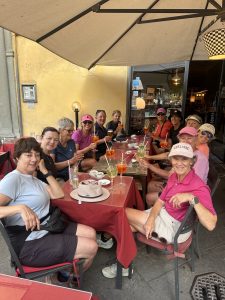
They normally say, no one walks the Via Francigena for the food. Unless you are on a Walk Local tour !! We certainly ate our way through Italy.
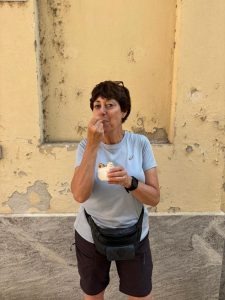
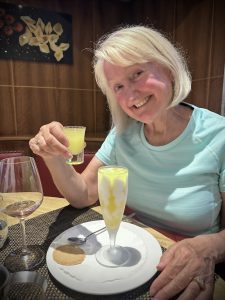
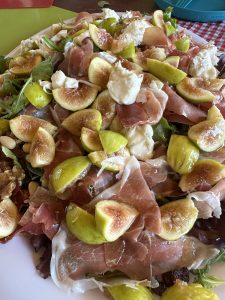
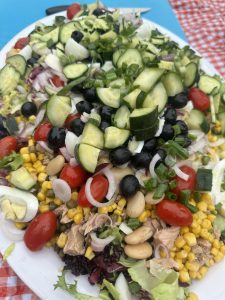
Every region offered its own treasures: creamy risottos, fresh figs, wild honey, burrata, tortellini, gnocchi, and endless varieties of bread, olive oil, and wine. We picnicked under chestnut trees with salads of rocket, orange, Parmesan, and walnuts; shared carafes of Lambrusco and local reds after long days on the trail; and ended evenings laughing over tiramisù, pannacotta, semi freddo, or a simple gelato in the square.
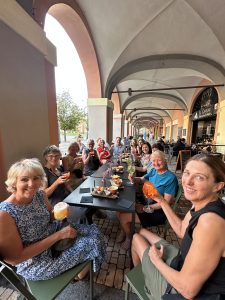
These moments — sitting around a table with tired legs, sun-warmed faces, and glasses raised — were as much a part of the journey as the walking itself. Food in Italy isn’t just nourishment; it’s connection. It’s the joy of slowing down, sharing, and appreciating the simple beauty of what’s right in front of you.
The salads!
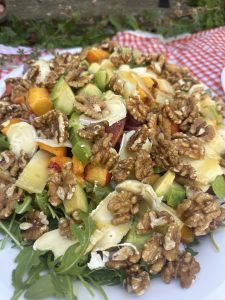
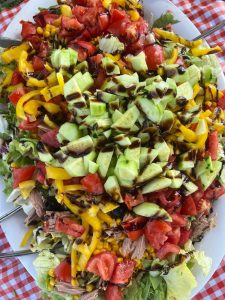
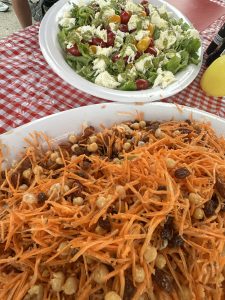
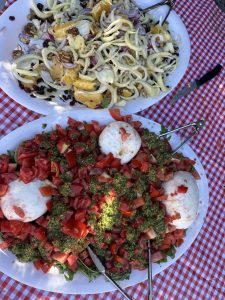
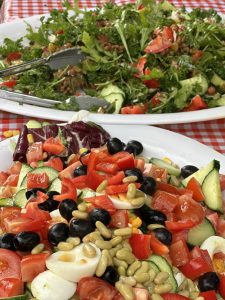
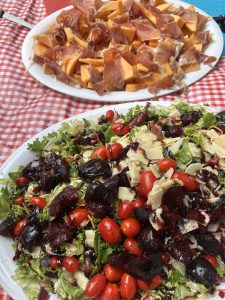
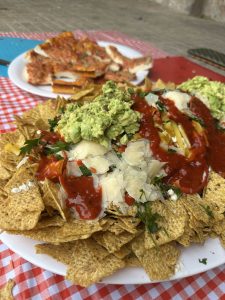
And my favourite desserts – coffee and chocolate semifreddo, pannacotta with wild berries, gelato with crushed biscuits, mango tart, the sliced pineapple and of course, tirimisu.
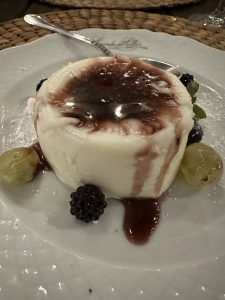
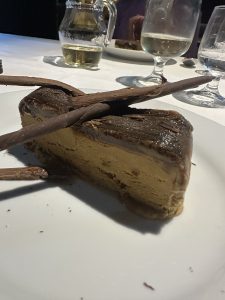
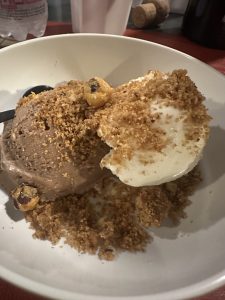
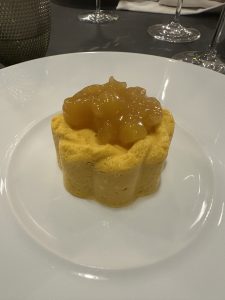
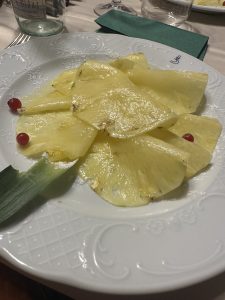
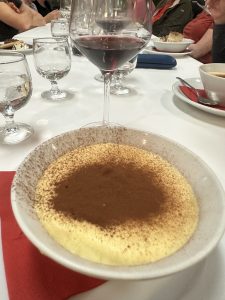
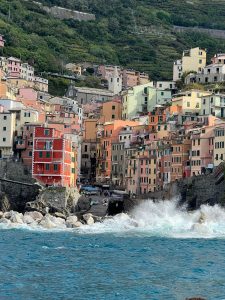
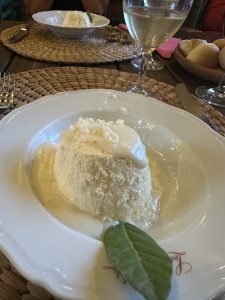
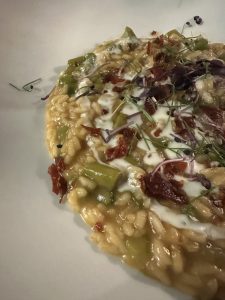
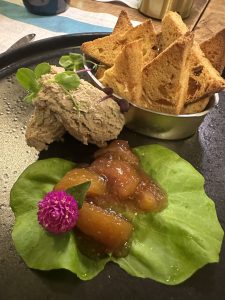
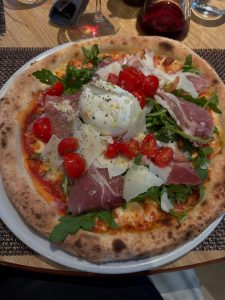
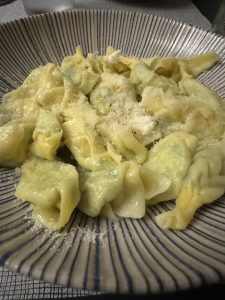
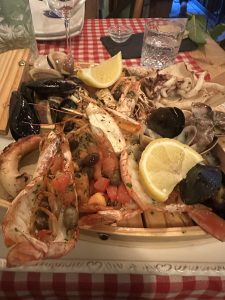
And just a few of my favourite meals, parmesan souffle with the 3 year old aged parmesan fondue, risotto, Davide’s amazing goose pate, the yummy pizza with buffulo mozarella and of course the light and fluffly tortelli filled with spinach and ricotta in Piacenza. Well, also the fritto misto in the Cinque Terre.
Spirit of the Walk
Every long walk changes you, but this one felt especially profound.
There’s something about moving through a country entirely on foot — the rhythm, the patience, the slow unfolding of landscape and culture — that brings a deeper kind of understanding. You see the small things: a farmer waving from a tractor, laundry flapping from balconies, children playing in village squares, and the scent of garlic and onion drifting through open doors.
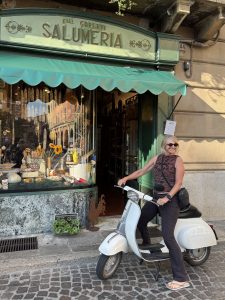
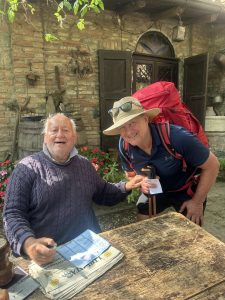
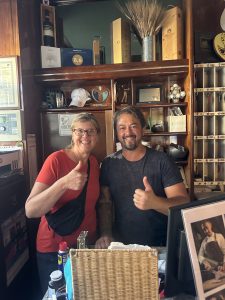
We met so many wonderful Italians along the way — our incredible accommodation owners, who treated us like family, bar owners who insisted on topping up our wine “just a little,” villagers who pointed us in the right direction when signs disappeared, and fellow pilgrims from around the world who shared their stories and steps.
It’s easy to romanticise walking through Italy, but make no mistake — this was tough. There were long, hot days, heavy packs, aching feet, and sore shoulders. But those challenges made the joy even greater. Each hill conquered, each rainstorm endured, each blister taped became a small badge of honour.
And always, there was laughter. So much laughter.
Reflections on the Road
By the time we reached Lucca — walking through olive groves and Tuscan hills, under blue skies — there was a quiet understanding among us. We had done something special.
The Via Francigena isn’t about records or competition. It’s about endurance, community, and perspective. It’s about finding beauty in simplicity — the morning light, the first sip of coffee, the kindness of strangers, and the rhythm of your own footsteps.
As we entered Lucca, those ancient walls felt like a gateway to something bigger — not just the end of a walk, but the beginning of new possibilities. We had walked hundreds of kilometres, but we had also walked into deeper versions of ourselves: stronger, more grateful, more open.
Gratitude
To my incredible walkers — thank you. You showed such courage, humour, and heart. You embraced every challenge, celebrated every milestone, and supported one another endlessly. I couldn’t have asked for a better group to share this adventure with.
To the people of Italy — grazie mille for your warmth, generosity, and endless enthusiasm. From mountain inns to seaside trattorias, you reminded us daily that life is best lived with passion, kindness, and a good glass of wine.
And to those who dream of walking — do it. Whether it’s the Via Francigena, the Camino, or your own path through life, take that first step. It might be the hardest, but it will change you forever.
Buon Camino and until next time, Salute!
Carolyn